But on an August morning in 1930, this quiet little town became the scene of what the City of Temecula identifies as the first bank robbery in Riverside County.
A Bank Built for a Growing Community
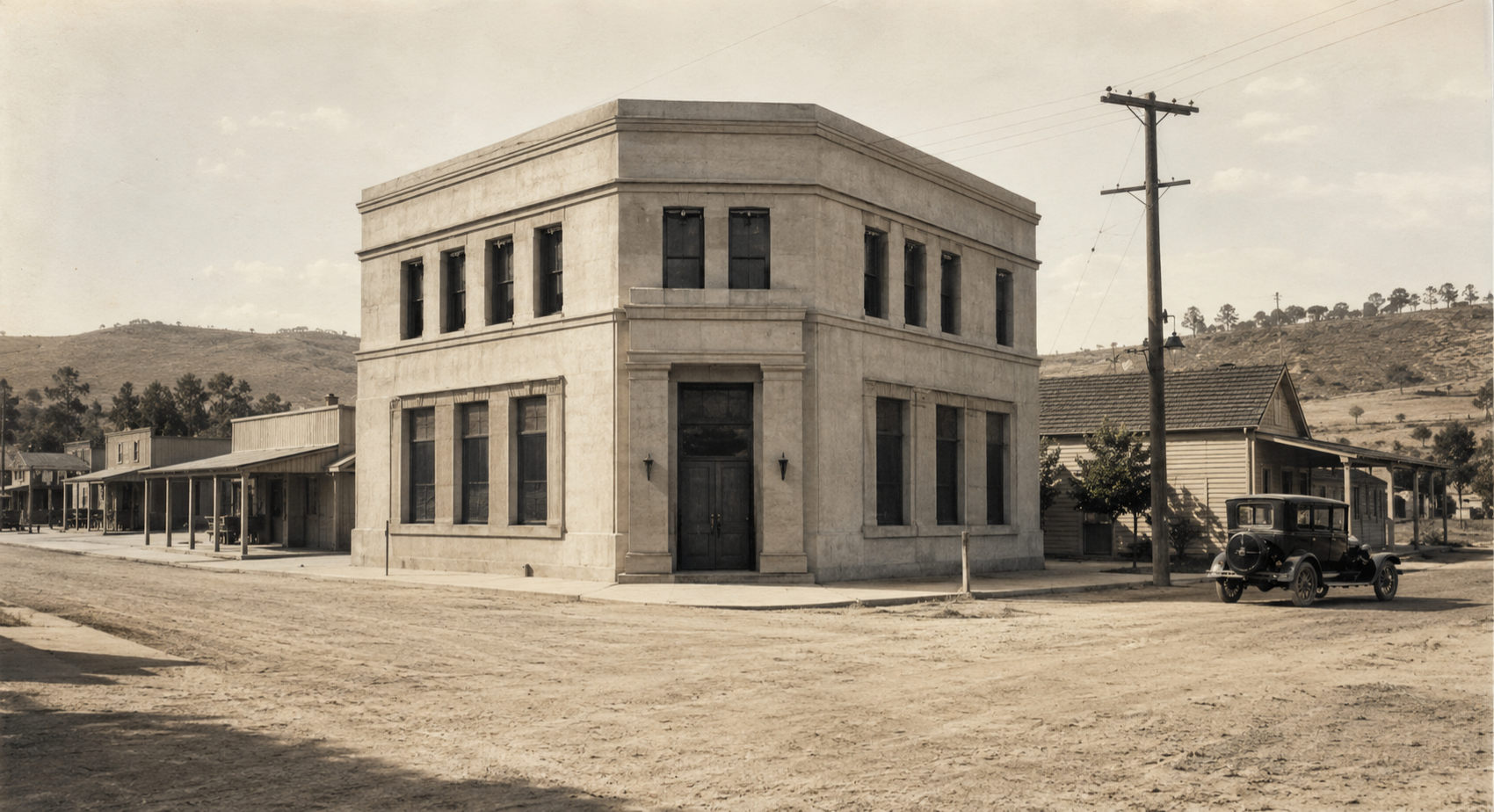
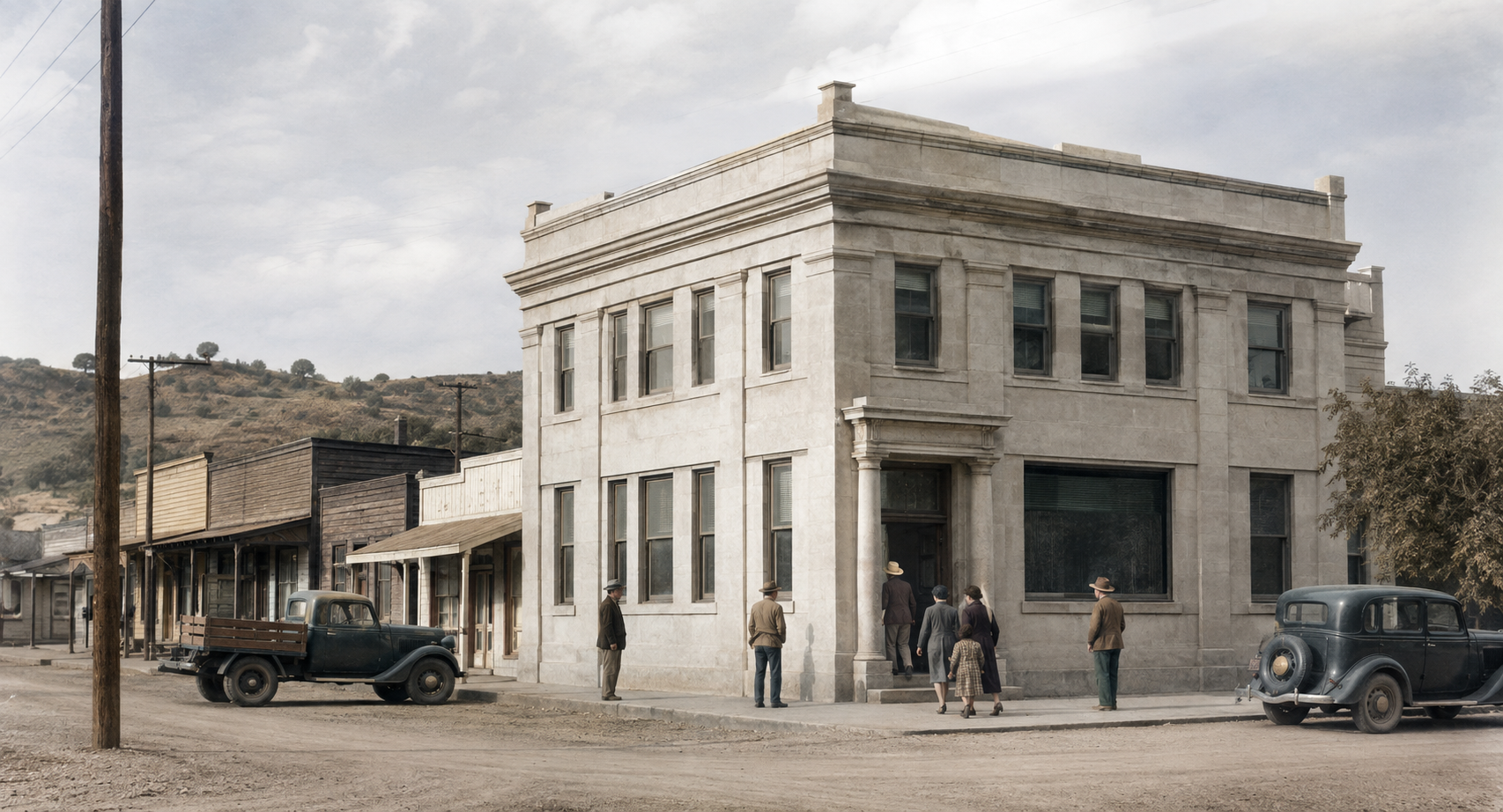
The First National Bank of Temecula opened for business in 1914 at the corner of Front and Main Streets, in the heart of what we now know as Old Town Temecula.
The imposing two-story building looked appropriately secure. Its cement walls were approximately 18 inches thick, reinforced with steel rods and anchored to steel plates. Laborers reportedly poured the walls by pushing wheelbarrows filled with cement up ramps and across scaffolding.
The building was Temecula’s first poured-concrete structure and is considered by some historians to have been among the earliest of its kind in Southern California.
In those days, Temecula was still cattle country. The bank served local ranchers, farmers, merchants, and residents at a time when the community’s commercial center was clustered around Front Street and the nearby railroad.
An August Morning in 1930
According to the City of Temecula, the robbery occurred on August 14, 1930.
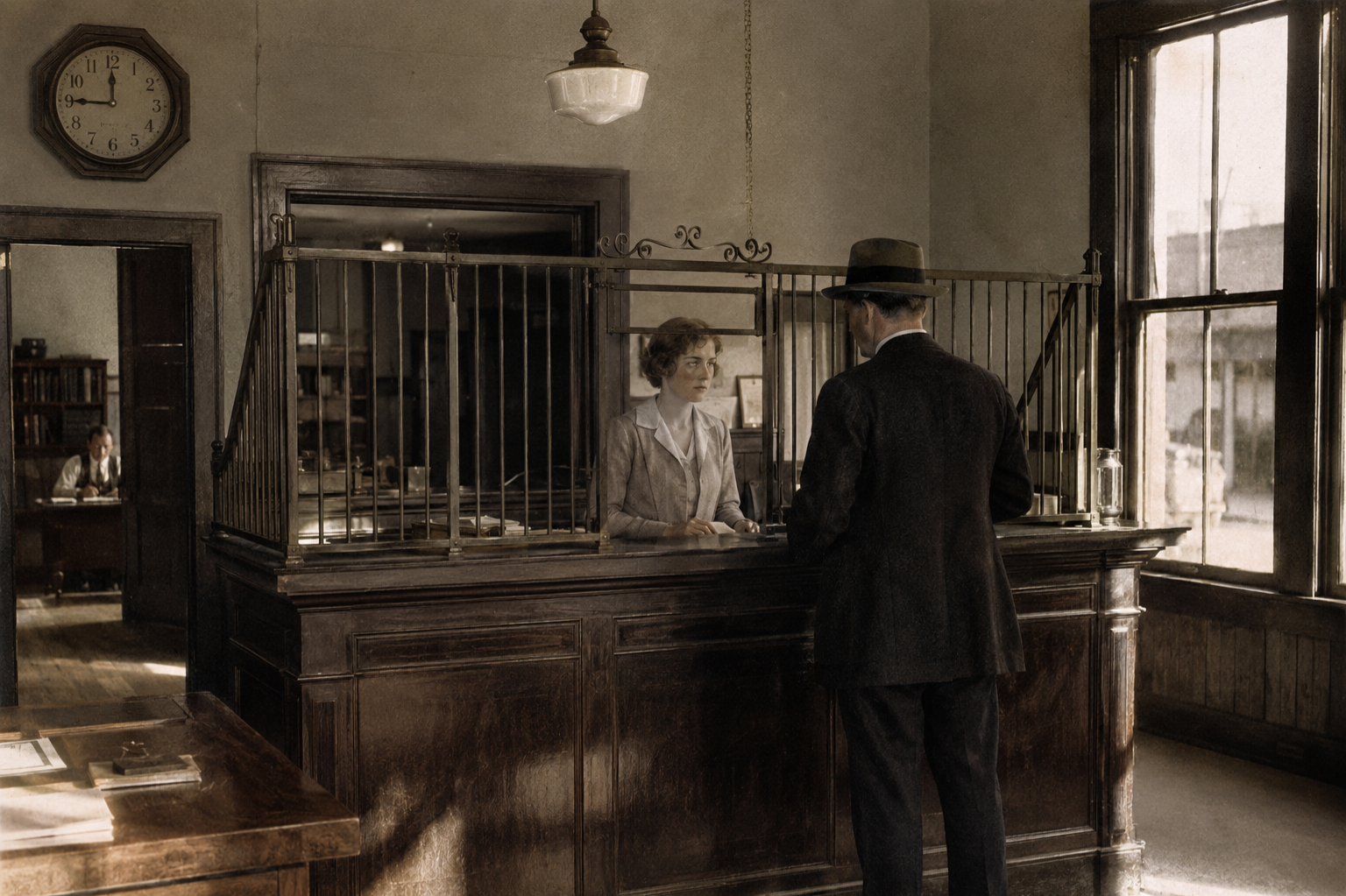
Shortly after the bank opened, a man identified as Michael “Jerry” Diaz approached the teller’s window. Young teller Agnes Freeman was at the counter, while bank cashier John W. Chisholm was working in a back room.
Diaz produced a gun and demanded money.
The robber then attempted to confine the bank employees inside the vault before making his escape. However, the bank employees managed to prevent the vault door from closing completely, allowing them to get out and raise the alarm.
What followed sounds like a scene from an early Western.
The Chase Up Winchester Road
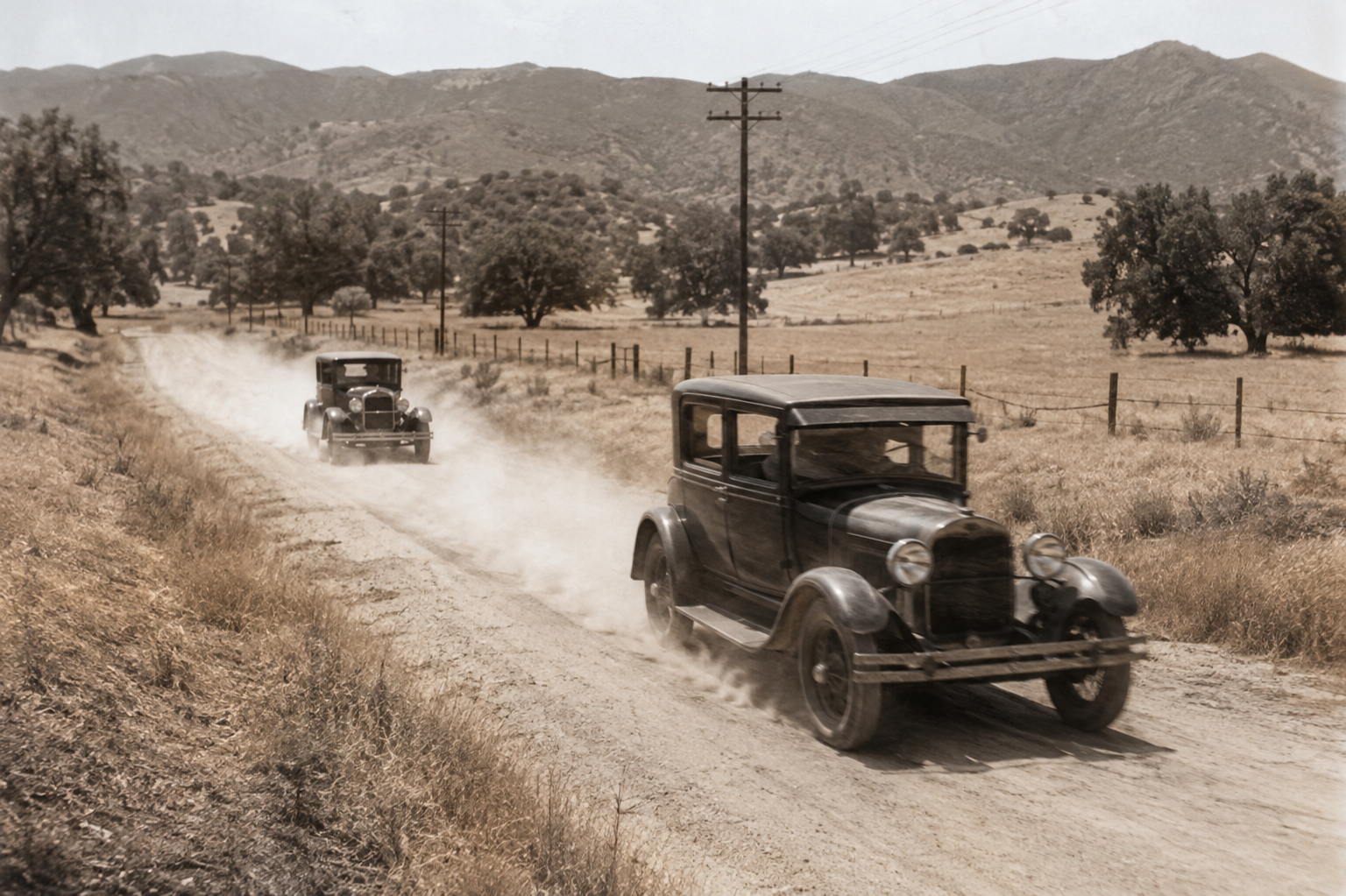
Diaz fled the bank and headed out of town. Chisholm and other local residents quickly gave chase.
The pursuit continued for approximately two miles along Winchester Road. Chisholm reportedly fired shots through the windshield of the getaway vehicle, convincing Diaz to stop and surrender.
The stolen money was recovered, and Diaz was later convicted of first-degree robbery. Historical accounts say he served approximately three years in prison before being paroled.
Freeman and Chisholm were recognized for their courage. The bank’s insurance company reportedly presented Freeman with a diamond brooch and Chisholm with a nickel-plated .45-caliber pistol.
It was a dramatic conclusion to a crime that might otherwise have become one of Temecula’s enduring mysteries.
The Bank Survives the Depression
The First National Bank remained open through the Great Depression, a period when thousands of banks across the country failed.
It continued operating into the early 1940s. After the bank closed, the building served the community in several other capacities. Its second floor was used for years as a community center and dance hall, and the building later became familiar to generations of residents as the home of a Mexican restaurant.
The historic structure still stands in Old Town, a physical link to Temecula’s early commercial and ranching days.
From Ranching Town to Wine Country Destination
Temecula remained a relatively small community for decades after the robbery.
That began to change in 1964, when the Vail family sold its approximately 87,500-acre ranch to Kaiser-Aetna. The development company envisioned a new community called Rancho California, complete with homes, agriculture, and commercial development.
The arrival of Interstate 15 brought another major transformation. Temecula’s population grew rapidly, and the city was officially incorporated in 1989.
Today, the corner of Front and Main Streets sits at the center of a vibrant Old Town filled with restaurants, shops, entertainment, and visitors. Yet the old bank building remains a reminder of the much smaller town that came before it.
Its story includes ranchers, concrete walls, a quick-thinking teller, an armed pursuit, and a bank robber who discovered that escaping Temecula was not as easy as he had expected.
That is quite a history for one Old Town building.